
The Virgin Birth – Madness or Miracle?
Confession time—I love Christmas. There it is, out in the open. Every post in December connects to the Christmas story. So, let’s discuss something controversial: the Virgin Birth. Yes, the idea that Mary, a young Jewish girl from Nazareth, conceived the Son of God while still a virgin.
Before diving into the “how” and “why,” consider how the Gospel of Luke offers a front-row seat to this miracle. Luke’s account overflows with emotion, wonder, and Mary’s incredible response of faith. Grab a cup of tea (or something festive), and let’s dive in.
Scripture Speaks of the Virgin Birth
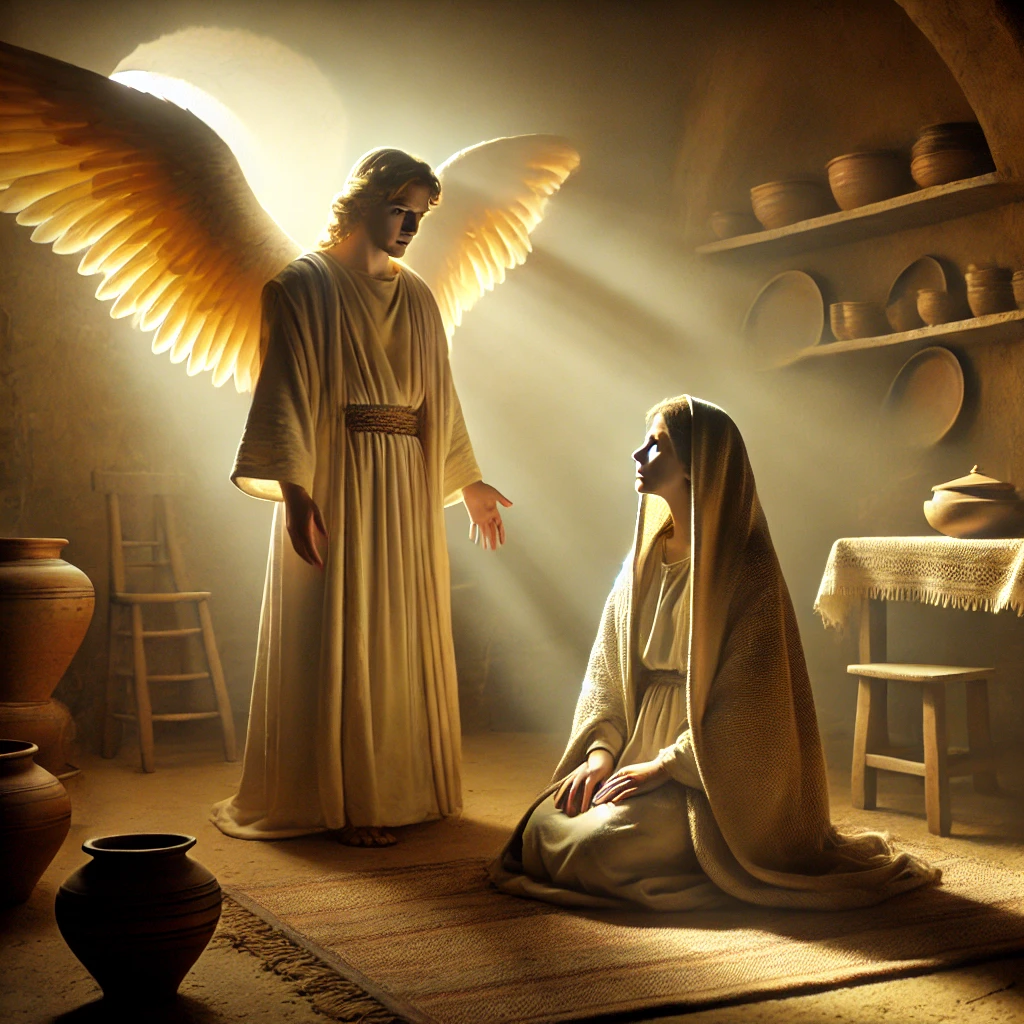
Luke’s Gospel paints a detailed and tender picture of the events leading to Jesus’ birth. Mary, described explicitly as a virgin—twice, for emphasis (Luke 1:27)—encounters the extraordinary. A question often raised is, how old was the virgin Mary when she gave birth? Jewish parent weren’t in the habit of giving away their daughters before they were ready. She was most likely 18-20, but no younger than 16. Now, when Gabriel delivers the news that she will bear a son—the Son of the Most High—Mary reacts with both humanity and holiness.
She asks the angel:
“How will this be, since I have not had sexual relations with a man?” (Luke 1:34).
Fair question, right? Mary doesn’t doubt God’s ability but genuinely seeks to understand how this will work. Gabriel answers with profound simplicity:
“The Holy Spirit will come upon you, and the power of the Most High will overshadow you” (Luke 1:35).
God Himself would bring this miracle to life.
Mary’s response moves from the natural to the supernatural. Rather than retreat, she declares:
“I am the Lord’s servant… May your word to me be fulfilled” (Luke 1:38).
What faith! Likely an older teenager at this point, Mary hears astonishing news and embraces it. She trusts God completely, even without fully understanding. That’s the kind of faith we all need.
Sceptics Gonna Sceptic
Now, let’s address the elephant in the room—sceptics. Since the Virgin Birth first emerged, it has faced doubt and derision. Even in the Gospels, people hinted at suspicion regarding Jesus’ birth. In Mark 6:3, Jesus is called “the son of Mary,” an unusual phrase since men were typically identified by their father’s name. This subtle jab suggests awareness of the unusual circumstances of Jesus’ birth. In John 8:41, Jewish leaders accuse Jesus of illegitimacy with the harsh statement: “We were not born of sexual immorality.”
Today, sceptics persist. Some claim the Virgin Birth mimics pagan myths, where gods impregnate women. Others argue early Christians invented the story to fulfill Old Testament prophecy, particularly Isaiah 7:14, which speaks of a virgin conceiving a son. These theories fail under scrutiny.
It’s All About Perspective
Once we believe in the Trinitarian Creator God, the Virgin Birth ceases to be an issue. If God exists as Father, Son, and Holy Spirit—if Jesus is fully God and fully man, co-eternal with the Father, and if the Holy Spirit actively participated in creation—then a miraculous conception falls well within God’s capabilities. Jesus wanted to enter the world as we do but couldn’t be created the same way, as He has existed for all eternity.
This isn’t a pagan myth of gods impregnating women in scandalous acts. Instead, the Holy Spirit overshadowed Mary in a pure, holy moment. God intervened in history, fulfilling His redemptive plan. If God can create the universe, He can certainly handle a virgin birth.
Arguments for the Virgin Birth
Luke provides reliable, independent testimony of the Virgin Birth. He painstakingly gathered eyewitness accounts, and Mary’s words shine through his Gospel. Her humility, questions, and trust point to the event’s authenticity.
Even Gospels without birth narratives hint at Jesus’ unique origins. Mark’s “son of Mary” and John’s subtle commentary reveal a buzz about Jesus’ birth. Paul also touches on the Virgin Birth. In Galatians 4:4, he describes Jesus as “born of a woman,” a phrase that gains weight given Paul’s usual avoidance of birth stories. Similarly, Romans 1:3 refers to Jesus as “becoming” (ginomai) from David’s line, subtly pointing to a miraculous birth.
The author of Hebrews compares Jesus to Melchizedek, described as “without father or mother” (Hebrews 7:3). These references suggest Jesus’ birth was anything but ordinary.
Mary’s Faith – An Example for Us All
At the center of this story is Mary, a young woman faced with an unimaginable task—bearing the Son of God. She believes and steps out in faith, trusting that God’s plans and abilities exceed her understanding. While Mary asks questions, she doesn’t let them prevent her obedience.
Her response to Gabriel should inspire our response to God’s calling. When God asks us to trust Him, even in the face of uncertainty, can we say, “May it be to me as you have said”?
The Christmas Miracle and the Holy Mystery
The heart of the Christmas story is a miracle—not just a baby born in humble circumstances but God entering the world in the most unexpected way. The Virgin Birth is both a mystery and a declaration of who Jesus is—God with us, born not of human will but divine purpose.
This Christmas, let’s embrace the Virgin Birth as a glorious display of God’s power and grace, bringing salvation through the faith of a young girl who said “yes” to God. If God can create the universe and sustain life itself, the Virgin Birth is no stretch.
Go well, my friend, and may the wonder of this season fill your heart with hope and joy.
PS.Click here for a All Angels singing Highly Favoured Lady
Jesus is the exact image of God, we bear his image.